Unraveling the Hello Neighbor Endings: Deciphering the Story's Complexities
The Enigmatic Conclusion: Understanding Hello Neighbor's Endings
Ah, Hello Neighbor. A game that captivated us with its unsettling atmosphere, puzzling mechanics, and a story veiled in mystery. For countless players, reaching the end wasn't just about escaping the Neighbor's house; it was about grappling with a narrative that defied straightforward interpretation. The 'endings' in Hello Neighbor are less about definitive conclusions and more about profound psychological insights into the characters, particularly our protagonist and the enigmatic Mr. Peterson.
A Journey Through Childhood Trauma and Symbolism
From the moment we first stepped into that peculiar neighborhood, we were thrust into a world where reality bends and childhood fears take tangible form. The game's narrative is a masterclass in environmental storytelling, subtly hinting at past tragedies and unresolved grief. The various 'endings' aren't a series of distinct cinematic conclusions, but rather the final chapters of a deeply symbolic journey, each segment offering a piece of a larger, more heartbreaking puzzle.
Many speculate that the entire game is a metaphorical representation of a child processing trauma. The Neighbor, Mr. Peterson, is often seen as a reflection of the protagonist's own fears or a figure from a past incident, perhaps even a parent. The house itself, with its ever-shifting architecture and dark secrets, embodies the fragmented memories and suppressed emotions of a troubled mind.
The Finale: Interpretations and Theories
The game culminates in a series of surreal sequences that challenge the player to piece together the narrative. We face a giant version of the Neighbor, navigate through a surreal dreamscape, and confront shadows of the past. One prevailing theory suggests that the 'ending' sees our protagonist, as an adult, finally confronting and coming to terms with the childhood trauma that has haunted him. The 'Neighbor' character might not be a real person in the traditional sense, but a manifestation of guilt, fear, or unresolved pain.
Another popular interpretation posits that the protagonist is revisiting his childhood home, now overgrown with memories and fears, after a traumatic event involving Mr. Peterson's family. The final moments where the child sees the house collapse or is left alone often symbolize acceptance, closure, or the ongoing struggle with internal demons.
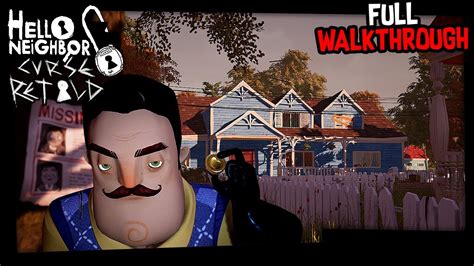
Here's a visual reminder of the mysterious world we navigate:
Key Elements of the Hello Neighbor Story's Conclusion
To truly grasp the endings, it’s essential to look at the recurring motifs and the psychological depth embedded in the game. Here's a table summarizing some critical elements that contribute to the game's ambiguous yet profound conclusion:
| Category | Details |
|---|---|
| The Neighbor's Basement | Symbolizes hidden secrets and repressed memories, often believed to contain the Neighbor's own family tragedy. |
| The Giant Neighbor | Represents an overwhelming fear or a monumental obstacle the protagonist must overcome. |
| The Train Set | A recurring motif of childhood and potentially a past accident involving the Neighbor's family. |
| The Shadow Man | Often interpreted as the protagonist's own guilt, fear, or a manifestation of the Neighbor's past trauma. |
| The Player as a Child | Suggests the entire game is a retrospective journey, viewed through the lens of childhood memory. |
| Escaping the House | Can symbolize confronting and moving past a traumatic event or a difficult period in life. |
| The Empty Chair | A poignant symbol of loss and absence, hinting at a family tragedy. |
| The Sandbox Segment | Represents the raw, unfiltered memories and fears from childhood, a place of both innocence and terror. |
| The House's Transformation | Reflects the subjective nature of memory and how trauma can distort one's perception of reality. |
| Ambiguous Resolution | Leaves room for player interpretation, enhancing the psychological horror aspect and replayability. |
The Lingering Impact of Mystery
Ultimately, the beauty of Hello Neighbor's endings lies in their open-ended nature. They don't spoon-feed you answers but invite you to reflect, hypothesize, and even invent your own interpretation of the events. This approach ensures that the game's narrative continues to resonate long after the credits roll, fostering a vibrant community of theorists and lore enthusiasts.
The emotional impact is profound. We see a story not just of a curious child and a reclusive neighbor, but of the universal struggle with grief, fear, and the search for understanding in the face of the unknown. It’s a testament to the game's design that its most powerful moments are often left unsaid, allowing our imaginations to fill the haunting blanks.
Posted: June 19, 2026